
Indonesia’s New Halal Guidelines for Retail Sales: What Businesses Need to Prepare
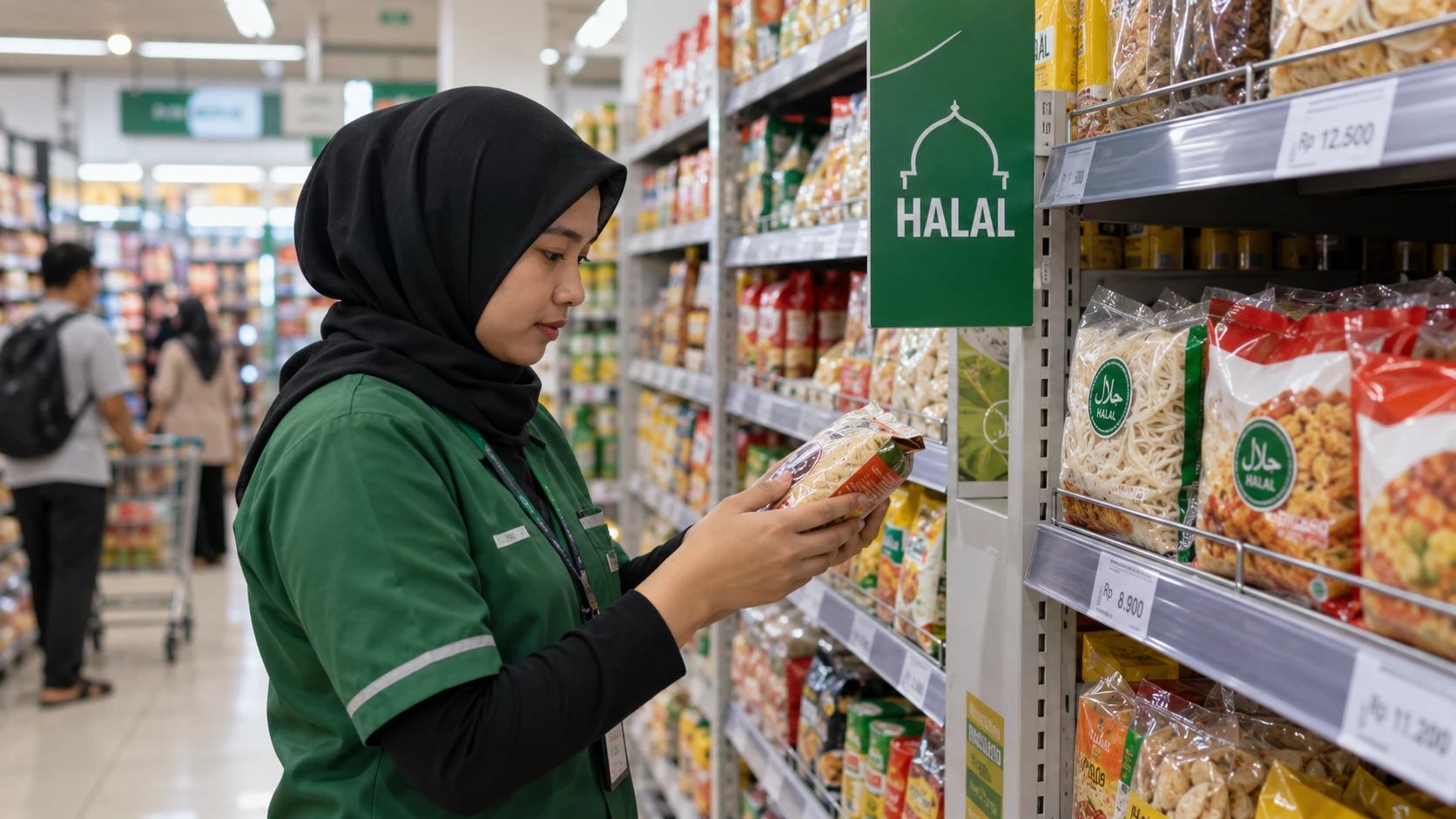
Indonesia’s halal compliance framework extends beyond the products on store shelves to the way retailers receive, store, display and sell them. BPJPH Head Decree No. 376 of 2026 introduces guidelines for implementing the Halal Product Assurance System for sales services, with practical implications for supermarkets, pharmacies, cosmetics retailers and businesses selling through electronic commerce.
A New Framework for Retail Operations
Issued and effective on 12 October 2026, the decree supports the sales-service halal certification framework under Government Regulation No. 42 of 2024. Its guidelines address risks throughout retail operations, including sourcing from suppliers without halal certification, cross-contamination during storage and distribution, and errors in packaging or labelling.
For businesses within its scope, compliance requires attention to operational procedures, staff responsibilities and the physical handling of goods.
Businesses Covered and Phased Application Dates
The guidelines cover direct sales to end consumers by minimarkets, supermarkets, hypermarkets, pharmacies, drug stores, perfume stores, and cosmetics and personal care retailers.
Application is phased according to the products sold. For sales services involving food, beverages, cosmetics, natural medicines, quasi-drugs and health supplements, application began on 18 October 2026. Sales services involving over-the-counter and limited over-the-counter medicines follow on 18 October 2029, while those involving prescription medicines, excluding psychotropics, follow on 18 October 2034.
Retailers carrying several product categories should assess each category against the relevant date. A later application date for one category does not postpone the requirements applicable to another.
Exclusions and Special Treatment for Non-Food Stores
The decree provides specific exclusions for businesses selling only their own exclusive brand of goods that are halal-certified or covered by registered foreign halal certificates, or selling only goods exempt from mandatory halal certification. These exclusions are subject to conditions: the goods must remain in their sealed original manufacturer packaging and must not be opened, repacked, mixed or reprocessed.
Electronics stores, bookstores, household goods stores and similar businesses that also sell food, beverages, medicines or cosmetics are not required to obtain sales-service halal certification under these guidelines. They must, however, maintain procedures for handling products that do not meet halal criteria.
Separation of Halal and Non-Halal Goods
For covered retailers, a central requirement is the separation of halal and non-halal goods throughout receiving, storage, display and sale. This extends to the areas and equipment used to handle those goods.
Where space is limited, fresh and frozen non-halal animal products must be placed in dedicated chillers or display cases, with at least one metre of horizontal separation and a physical barrier, and handled by dedicated personnel.
Checkout arrangements also require attention. Services for non-halal goods must be separated. Where separate checkout services are not possible, the business must prevent contamination and ensure that personnel follow the prescribed purification requirements or wear gloves.
Halal Policies, Supervision and Supporting Materials
Operational controls must be supported by clear governance. Businesses must display a written halal policy in a visible location and appoint and report a Halal Supervisor. Medium-sized, large and foreign businesses must also ensure that their supervisors undergo competency testing.
Packaging, cleaning agents that come into contact with facilities, and cleaning-validation media must be supported by halal certification or appropriate halal documentation.
Labelling, Traceability and Periodic Reporting
Halal labels must be supported by valid halal certificates, while non-halal notices must be clearly displayed in the relevant storage, display and sales areas. Businesses must also be able to trace both the origin of their goods and their halal status.
Compliance continues after procedures are introduced. Internal audits and management reviews must take place at least annually. Information on material composition and halal product processes must be reported to BPJPH every six months and whenever changes occur.
Requirements for Electronic Commerce
For electronic commerce, the guidelines address the accuracy of halal information presented to consumers. Sales partners must meet the applicable certification or non-halal disclosure requirements and are responsible for the validity of halal information on the platform.
Delivery partners must preserve sealed packaging and may not open it. Businesses selling online should therefore review their product listings and delivery arrangements alongside their physical handling procedures.
Legal Consequences and Contamination Procedures
Decree No. 376 of 2026 does not itself introduce administrative or criminal sanctions. Breaches of halal assurance obligations remain subject to Law No. 33 of 2014 on Halal Product Assurance, as amended, and Government Regulation No. 42 of 2024.
The guidelines nevertheless prescribe handling measures for contamination incidents. Goods contaminated with najis must be controlled and quarantined pending determination of their contamination status. Affected areas and equipment must be purified in accordance with Islamic law, and equipment may not be used interchangeably for halal goods and goods containing pork.
Preparing Your Business for Compliance
Businesses should begin by identifying which outlets and product categories fall within scope, then reviewing store layouts, warehouse arrangements, supplier documentation and online product information.
Written procedures should cover receiving, storage, display and sale, together with purification, quarantine and traceability. These procedures should be supported by staff training, internal reviews and reporting schedules.