
Indonesia Sets New Accreditation Rules for Migrant Worker Placement Companies
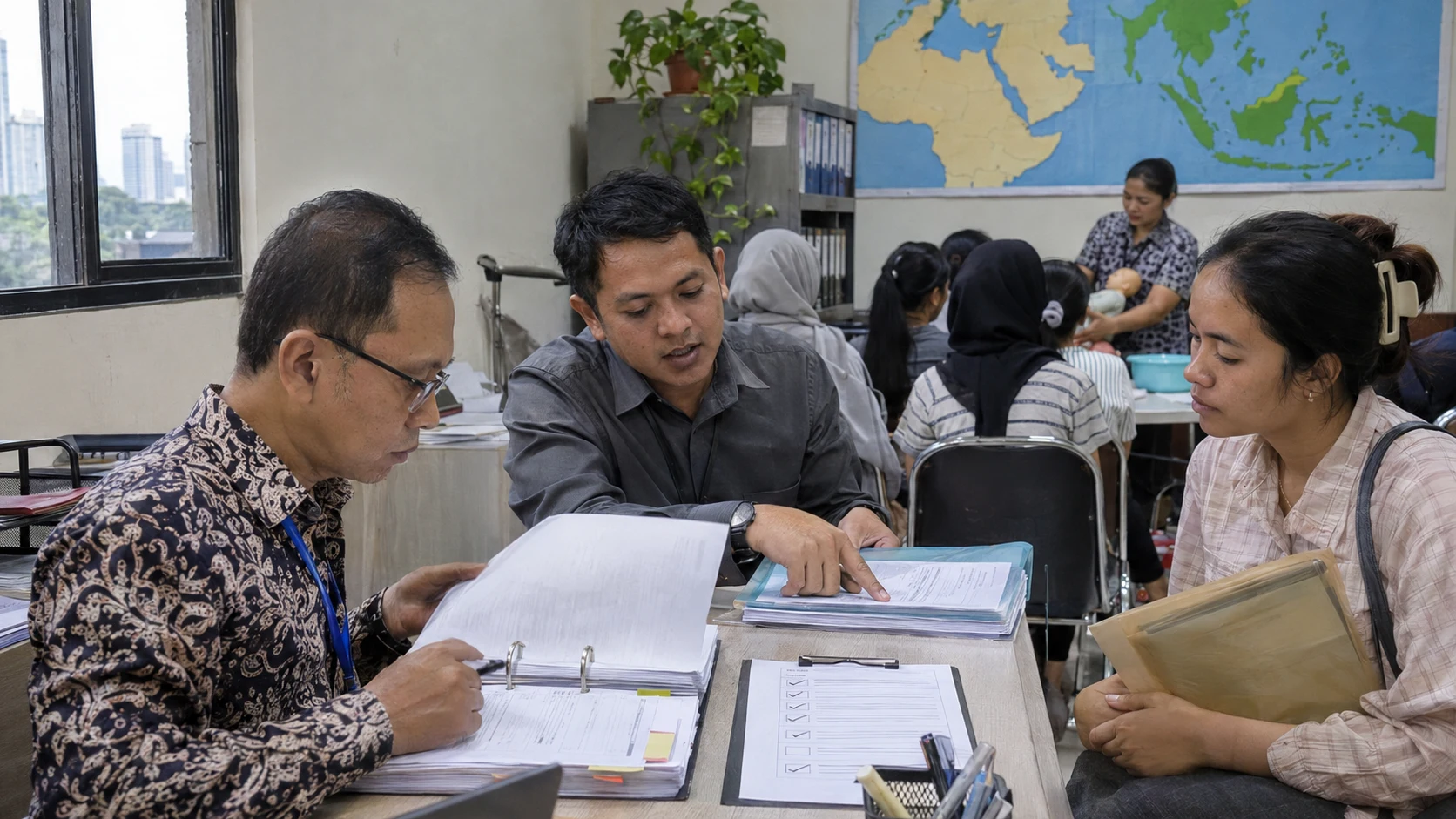
A new regulation establishes how Indonesia will assess the performance and compliance of licensed migrant worker placement companies. Self-assessment and an integrated digital system are scheduled to begin in 2027.
On 28 October 2026, the Minister for the Protection of Indonesian Migrant Workers/Head of the Indonesian Migrant Worker Protection Agency issued Ministerial Regulation No. 14 of 2026 on the Accreditation of Indonesian Migrant Worker Placement Companies. The Regulation was promulgated on 30 October 2026 and took effect on that date.
The Regulation establishes an accreditation framework for Indonesian Migrant Worker Placement Companies (P3MI). Accreditation assesses a company’s performance, fulfilment of its obligations, protection track record and placement risk. The results will inform government guidance and supervision, supporting a placement system that is accountable, transparent and focused on preventing risks to migrant workers.
How the accreditation process works
The process includes an announcement, self-assessment, administrative verification, scoring and determination of the accreditation result. Field verification and external validation may also be conducted where necessary. Administrative verification may include reviewing the completeness and validity of documents, comparing company submissions with supporting data, and examining placement reports, complaints, case histories, supervisory records and administrative sanctions.
P3MI will receive one of four ratings: Excellent, Good, Fairly Good or Not Accredited. Companies rated Excellent, Good or Fairly Good will receive an accreditation certificate. A company rated Excellent may also receive incentives, such as placement quotas or worker requests from employers, priority access to competency development for prospective migrant workers, a certificate of appreciation, and/or promotion to business partners and employers.
Company obligations and consequences of non-compliance
Before participating in accreditation, a P3MI must meet its licensing requirements and other obligations. It must complete the accreditation form accurately, provide all required supporting documents, facilitate access for the accreditation team and submit accurate information. If the team requests clarification or additional data, the company must respond within five working days of the request.
If a company does not complete its self-assessment by the specified deadline, it may be assessed using the available data and may be recommended for administrative sanctions under applicable laws and regulations.
A P3MI rated Fairly Good or Not Accredited must prepare an improvement plan and submit it to the Director General within 30 days after receiving the assessment result. The company must also carry out the plan. Failure to submit or implement it may result in administrative sanctions.
Certain critical findings will cause a company to fail the scoring stage. These may include indications of human trafficking, non-procedural or illegal placement, document falsification, fraud, unlawful charges, failure to protect migrant workers, cooperation with problematic business partners or employers, or failure to follow up on or resolve worker complaints without an accountable reason.
Transition to the 2027 system
The Regulation provides that self-assessment and the use of an information system integrated with Sisko P2MI will be introduced for the first time in 2027. For accreditation conducted in 2026, companies must submit supporting evidence directly, using the method determined by the Director General. P3MI should therefore follow official announcements on the applicable schedule, assessment indicators, supporting documents and procedures.
Final accreditation results will be made public through Sisko P2MI and/or the official KP2MI/BP2MI website. Published results will not include critical findings, which are reserved for government guidance, supervision and law enforcement in accordance with applicable laws. Accreditation may therefore affect how the government assesses a company’s compliance and protection record, as well as its reputation and opportunities to work with business partners.