
Indonesia Introduces Halal Product Assurance Guidelines for the Cosmetics Industry
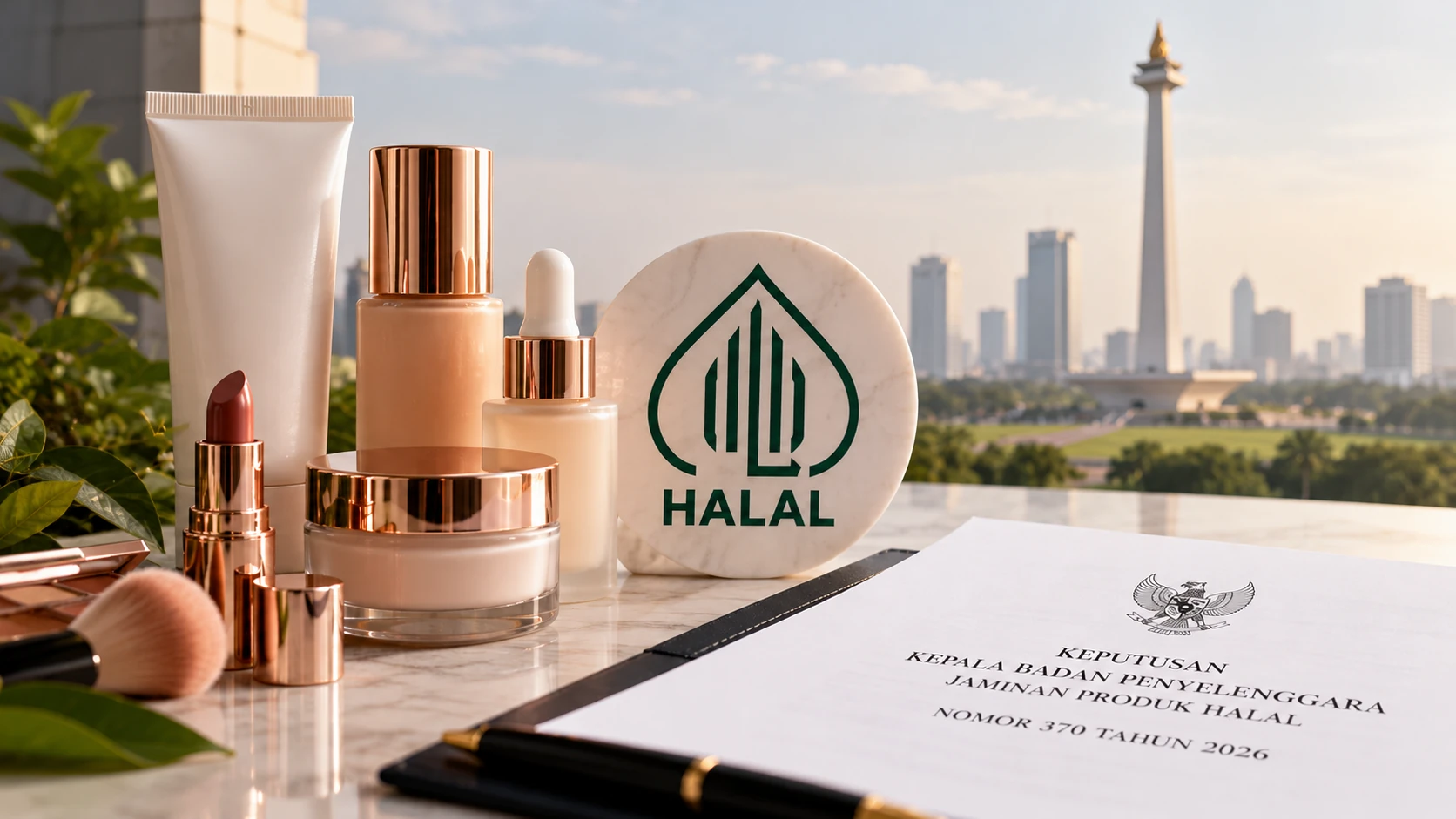
On 12 October 2026, the Head of Indonesia’s Halal Product Assurance Agency (Badan Penyelenggara Jaminan Produk Halal or “BPJPH”) issued Decree Number 370 of 2026 concerning Guidelines for Implementing the Halal Product Assurance System for Cosmetics (“Decree 370/2026”), which came into effect on 18 October 2026.
The decree introduces sector-specific guidelines for implementing the Halal Product Assurance System (Sistem Jaminan Produk Halal or “SJPH”) within the cosmetics industry. It provides a practical regulatory framework for cosmetics manufacturers and other relevant business operators to comply with Indonesia’s mandatory halal certification requirements under Government Regulation Number 42 of 2024 concerning the Implementation of Halal Product Assurance.
Rather than replacing existing regulations, Decree 370/2026 elaborates on the implementation of established halal assurance requirements, particularly in relation to material selection, production facilities, halal labelling, internal supervision, and periodic reporting.
Key Regulatory Requirements
1. Halal Policy and Supervision
Businesses are required to establish a written halal policy and appoint a Halal Supervisor (Penyelia Halal) responsible for overseeing the implementation of halal assurance requirements. Medium-sized, large, and foreign businesses must also ensure that their Halal Supervisors undergo competency testing.
2. Material Verification and Traceability
The guidelines establish comprehensive verification requirements covering raw materials, additives, processing aids, lubricants and sanitisers that come into contact with products, packaging materials, and applicators.
Businesses must maintain appropriate supporting documentation demonstrating the halal status of these materials, including halal certificates, applicable exemptions, certificates of analysis, material compositions, and other relevant technical documents.
The guidelines also establish restrictions on certain materials derived from human and animal sources, including specific limitations applicable to lip, dental, and oral cosmetic products.
3. Shared Production Facilities
Decree 370/2026 permits the use of shared production facilities for halal-certified and non-certified products, provided that the non-certified products do not contain prohibited materials and appropriate contamination-control documentation is submitted to BPJPH during the certification process.
This provision is particularly relevant to cosmetics manufacturers operating multiple production lines or producing both certified and non-certified products within the same facilities.
4. Halal Labelling Requirements
The guidelines clarify the placement of halal labels on cosmetic products. Where primary packaging is too small to accommodate the required Halal Label, businesses may place it on secondary packaging, product labels, or accompanying leaflets.
Cosmetic products certified by foreign halal certification bodies must display the Indonesian Halal Label together with the relevant foreign halal certificate registration number.
5. Internal Audits and Periodic Reporting
Businesses are required to conduct internal audits and management reviews at least once annually, with internal audit results reported to BPJPH.
In addition, businesses must submit their material composition lists to BPJPH every six months and whenever changes occur. These requirements reinforce the importance of maintaining updated product documentation and ongoing compliance monitoring.
Legal Consequences and Compliance Considerations
Although Decree 370/2026 does not independently introduce administrative or criminal sanctions, violations of halal product assurance obligations remain subject to Law Number 33 of 2014 concerning Halal Product Assurance, as amended, and Government Regulation Number 42 of 2024.
The guidelines also establish specific procedures for cosmetic products that fail to meet halal requirements. Such products may not be reworked, reformulated, or represented as halal. Where non-compliant products cannot be sold to consumers who do not require halal products, they must be destroyed. Products already distributed in the market must be recalled by the relevant business under BPJPH supervision.
Implications for Cosmetics Businesses
The introduction of Decree 370/2026 underscores the increasing importance of regulatory compliance throughout the cosmetics supply chain, extending beyond finished products to include sourcing, manufacturing processes, packaging, and internal quality assurance.
Cosmetics manufacturers, importers, and other relevant businesses should assess their existing halal assurance procedures against the eleven critical control points identified in the guidelines. Particular attention should be given to supplier documentation, material traceability, shared production facilities, Halal Supervisor competency, and periodic reporting obligations.
Businesses should also establish internal compliance schedules to ensure the timely completion of annual audits and semi-annual material composition reporting.
As Decree 370/2026 has been effective since 18 October 2026 and contains no transitional provisions, businesses should review the applicability of these requirements to their existing operations and halal certification processes.
The issuance of these guidelines represents a further step towards strengthening the implementation of Indonesia’s halal product assurance framework in the cosmetics industry, with an emphasis on consistent production standards, documented compliance, and continuous supervision.